There’s an unwritten rule in sports photography: you don’t get to choose the weather, you just choose how you respond to it.
When I arrived at Homewood Field in Baltimore Maryland for the matchup between Dickinson College and Johns Hopkins University last fall, the skies opened up. It wasn't a light drizzle—it was a persistent, heavy downpour. This was my very first time photographing a match in the rain, and it forced me to completely reframe how I approached the game.
Dickinson ultimately dropped this tough road match, but from a documentary standpoint, the conditions offered something raw, high-energy, and incredibly cinematic. As a photographer, our job isn't just to catch the easy moments on beautiful days. It’s to capture the true atmosphere of the sport—even when you’re freezing on the sidelines trying to keep your front element dry.
Finding the Visual Drama in Adverse Conditions
Bad weather is a massive logistical pain for gear safety, but visually? It is absolute magic!
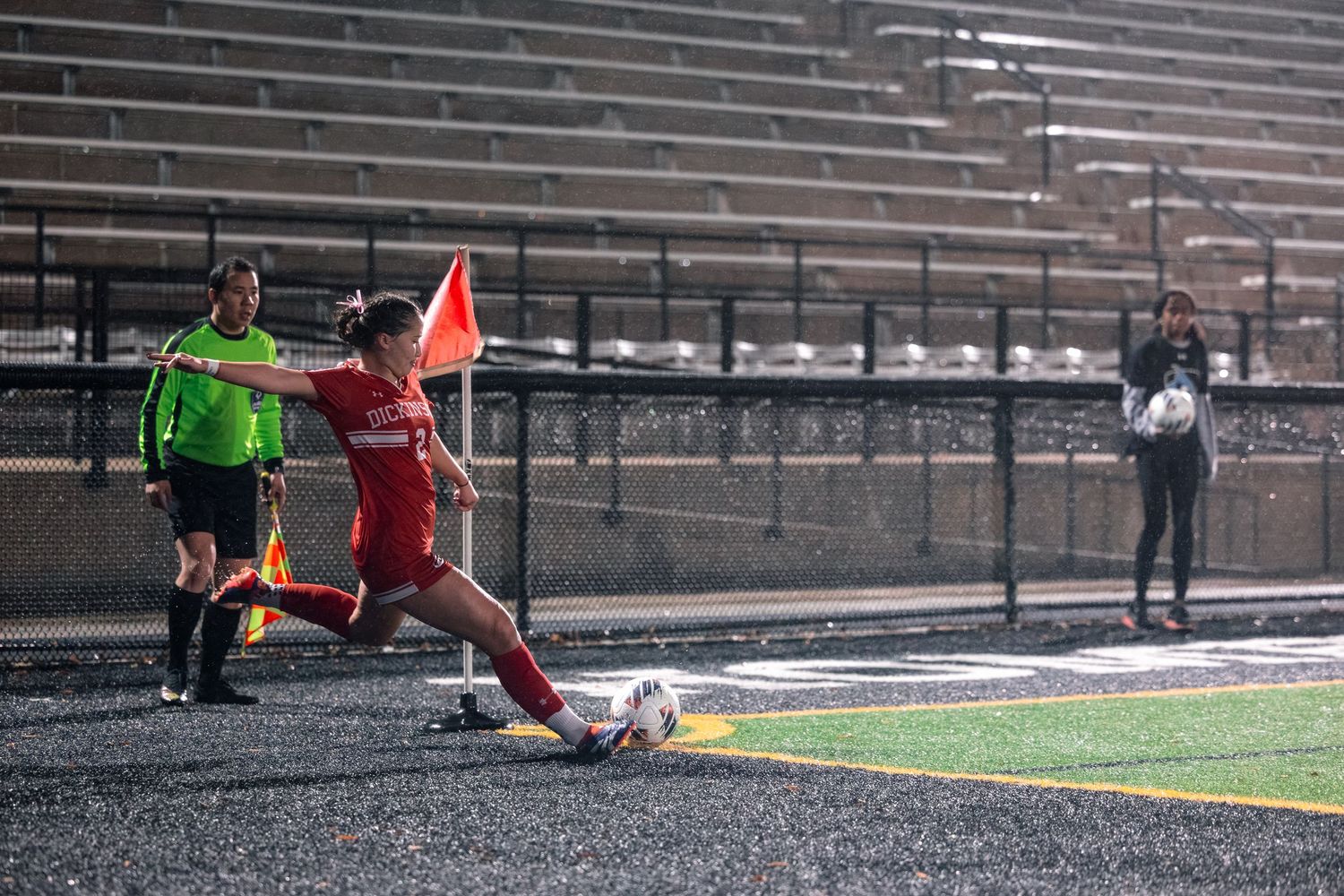
When you shoot under powerful stadium lights in a downpour, every single raindrop acts like a tiny prism. You can see the sheer volume of the rain slicing through the frame against the dark backdrop of the empty stands, creating a stunning backdrop for a lone player running down the pitch.
Instead of hiding the rain, I wanted to freeze it. By keeping my shutter speed exceptionally high, the rain stopped being a blur and became a distinct texture framing the athletes.
The Photographic Reality: You have to adapt on the fly. Your hands are wet, the lens hood is working overtime, and you are constantly wiping down your glass between plays. But the payoff is getting shots that feel entirely alive.


Capturing the Physics and Friction of the Game
A wet turf field completely alters how a soccer ball behaves and how players move. The game becomes faster, skips are unpredictable, and the physical friction increases.
You can see that physical intensity on full display when players battle fiercely for possession, the rain creating a mist around the impact zone and highlighting the tight, contested nature of Centennial Conference play. Even when focusing on isolated player movements, the environment dictates the shot—like a player anticipating a high ball, where the falling rain cuts through the stadium glare and amplifies the anticipation of the next play.
Adapting to the Flow of the Match
When you can't move around as easily due to slick sidelines and gear covers, you have to read the game more intentionally. You look for the specialized moments where the environment tells the story.
- The Set Pieces: Capturing a clean corner kick sequence from a low profile next to the corner flag allows you to capture the spray coming off the turf as the ball is launched back into the box.
- The Defensive Grunt Work: Shifting the focus to high-pressure defensive tracking sequences showcases the slickness of the pitch as players dig their cleats in to change direction.
- The Head-to-Head Battles: Tight tracking captures show the raw focus and determination required to maintain ball control when the surface feels like ice.

The Ultimate Team Context
At the end of the night, sports photography is about capturing the human element within the elements.
My favorite frame from the entire match has to be the team huddle under a single, blinding stadium light. Standing on the edge of the pitch, looking at the squad tightly packed together, you can see the steam and the rain completely engulfing them.
It perfectly encapsulates what it means to grind through a tough match. It doesn’t matter if it’s pouring, cold, or a difficult night on the scoreboard—you face it together.
For me, this match was a massive reminder of why I love sports photography. It’s unpredictable, it’s challenging, and it forces you to roll with the punches. If you are willing to embrace the downpour, the game will always reward you with stories worth telling.